Nouméa, New Caledonia

New Caledonia is a French overseas territory in the South Pacific. It comprises the main island, Grande Terre, and several smaller islands. Known for its stunning lagoons, coral reefs, and rich biodiversity, it boasts a blend of Melanesian, French, and Polynesian cultures. Nouméa, the capital, is a vibrant city with French colonial architecture, bustling markets, and beautiful beaches. Discovered by James Cook in 1774, New Caledonia became a French colony in 1853. It has significant nickel reserves, contributing to its economy. The indigenous Kanak people play a key role in its cultural identity, with ongoing discussions about independence from France.

Postcard from New Caledonia

New Caledonia postmark cancellation stamps

Tulips of The Netherlands

Tulips are iconic to the Netherlands, symbolizing its rich horticultural history and global flower trade. Introduced in the 16th century from the Ottoman Empire, tulips sparked “Tulip Mania” (1636-1637), one of the first recorded economic bubbles. Today, the Netherlands produces around 4.3 billion tulip bulbs annually, exporting them worldwide. The country’s flat landscape, fertile soil, and mild maritime climate create ideal growing conditions. Every spring, vast fields bloom in vibrant colors, drawing millions of tourists, especially to Keukenhof, the world’s largest flower park. Tulips remain a national pride, celebrated in art, festivals, and the Dutch economy.

Netherlands postmark stamp

Netherlands postmark stamp

Swoyambhu Stupa, Nepal

In Buddhism, a stupa is a mound-like or hemispherical structure containing relics that is used as a place of meditation. Swoyambhu Stupa is an ancient religious complex atop a hill in the Kathmandu Valley, west of Kathmandu city in Nepal. It is probably the most sacred among other Buddhism pilgrimage sites across the country. Nepal is a landlocked country in South Asia. It is mainly situated in the Himalayas.

Nepal postcard

Nepal postmark stamp

Nauru

Nauru is an island country and microstate in Micronesia, in the Pacific ocean. It is the third-smallest country in the world, larger than only Vatican City and Monaco, making it the smallest island nation. Its population of about 10,800 is the world’s third-smallest larger than only Vatican City and Tuvalu. Nauru is a phosphate-rock island with rich deposits near the surface, which allowed easy strip mining operations for over a century. However, this has seriously harmed the country’s environment, causing the island nation to suffer from what is often referred to as the “resource curse”. The phosphate was exhausted in the 1990s, and the remaining reserves are not economically viable for extraction. Nauru is also one of the least visited countries in the world, with about only 200 tourists a year. The remoteness and that much of the island is a charmless open phosphate mine are two strong reasons for this.

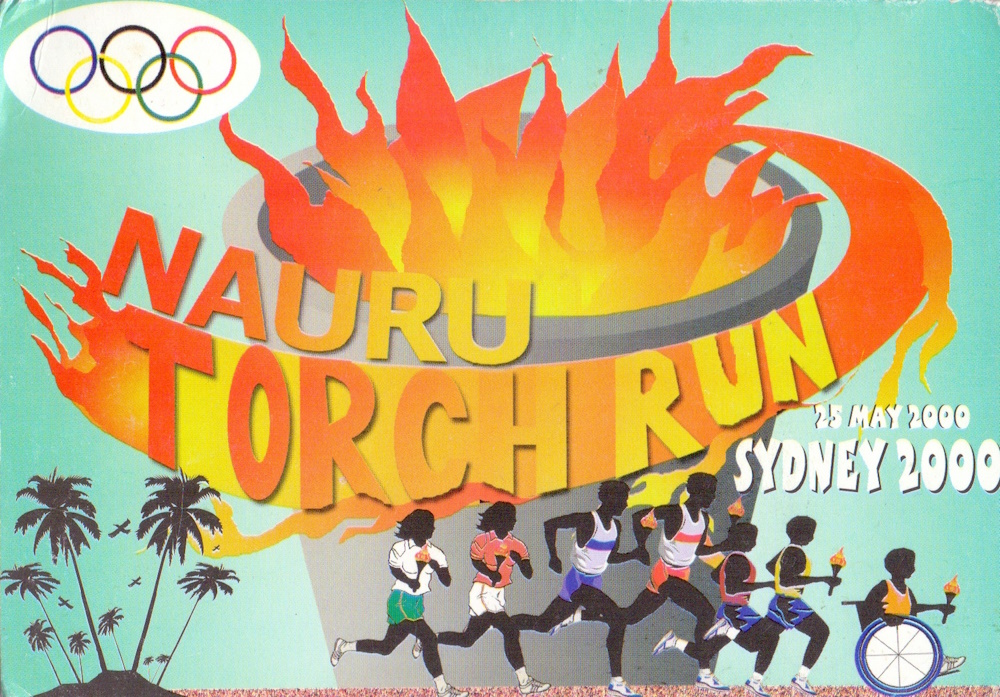
Nauru postcard

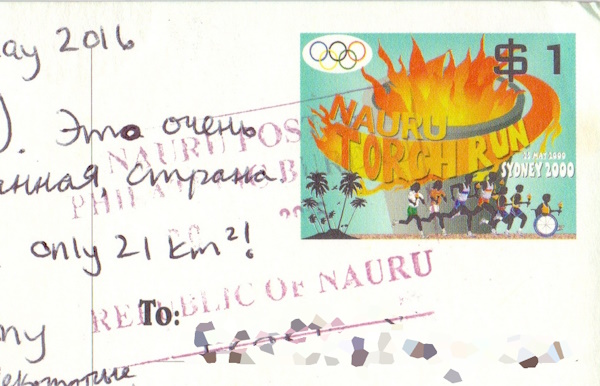
Nauru stamp postmark

Deadvlei, Namibia

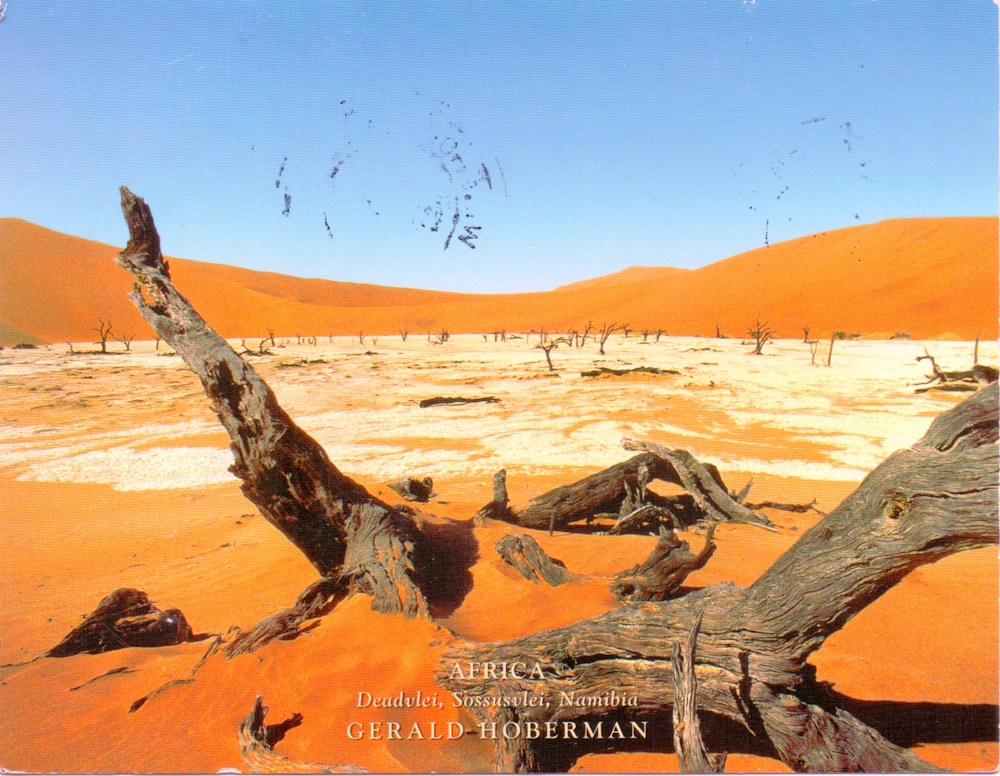
Deadvlei is a white clay pan located in a valley between the dunes in the Namib-Naukluft Park in Namibia. Also written Dead Vlei, its name means “dead marsh/lake”. The clay pan was formed after rainfall, when the Tsauchab river flooded, creating temporary shallow pools where the abundance of water allowed camel thorn trees to grow. When the climate changed, drought hit the area, and sand dunes encroached on the pan, which blocked the river from the area. The trees died as there was no longer enough water to survive. The trees are estimated to be approximately 900 years old, however they have not decomposed due to the dry climate.

Namibia postcard

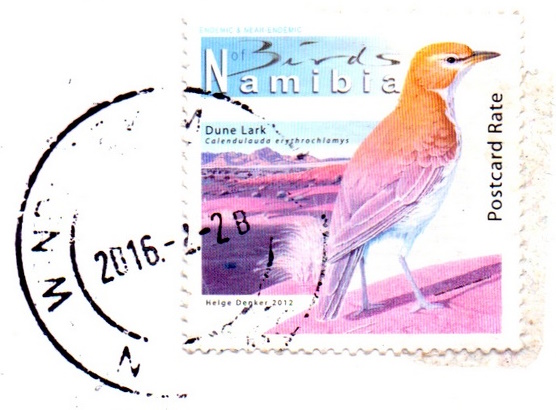
Namibia postmark stamp

Artsakh (Nagorno-Karabakh)

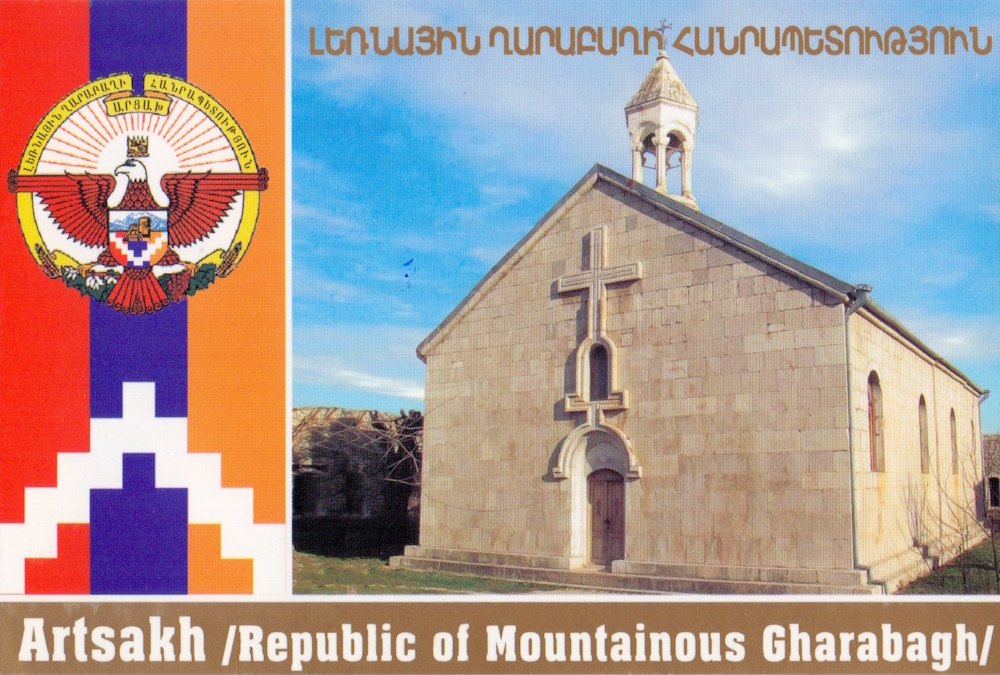
Artsakh, also known as Nagorno-Karabakh (literally “Mountainous Karabakh”), was a de-facto independent, predominantly Armenian-populated state, which existed following the conclusion of the First Karabakh War in 1994 to 2023, when Azerbaijan attacked and seized control of its territory. In pre-modern times the region was home to a now extinct culture that had converted to Christianity in the fourth century and had assumed some Armenian cultural traits. In 1813 the region was incorporated into the Russian empire, and later into the Soviet Union. Initially Karabakh was allocated to Soviet Armenia, but this decision was countermanded to see the region given instead to Soviet Azerbaijan as an autonomous district. Which eventually lead to the current conflict.

On the postcard: Monasterial complex of Amaras (IV century)

Nagorno-Karabakh postcard

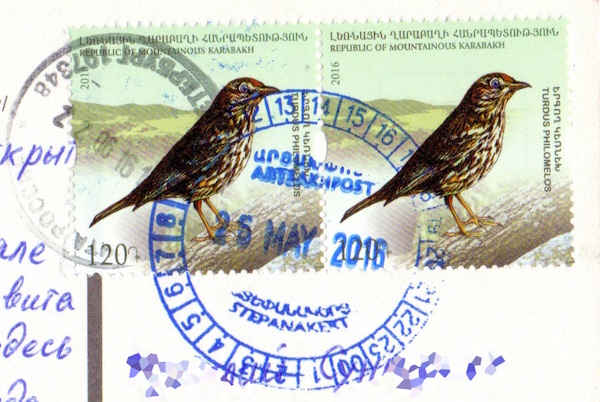
Nagorno-Karabakh postmark stamp

Maputo, Mozambique

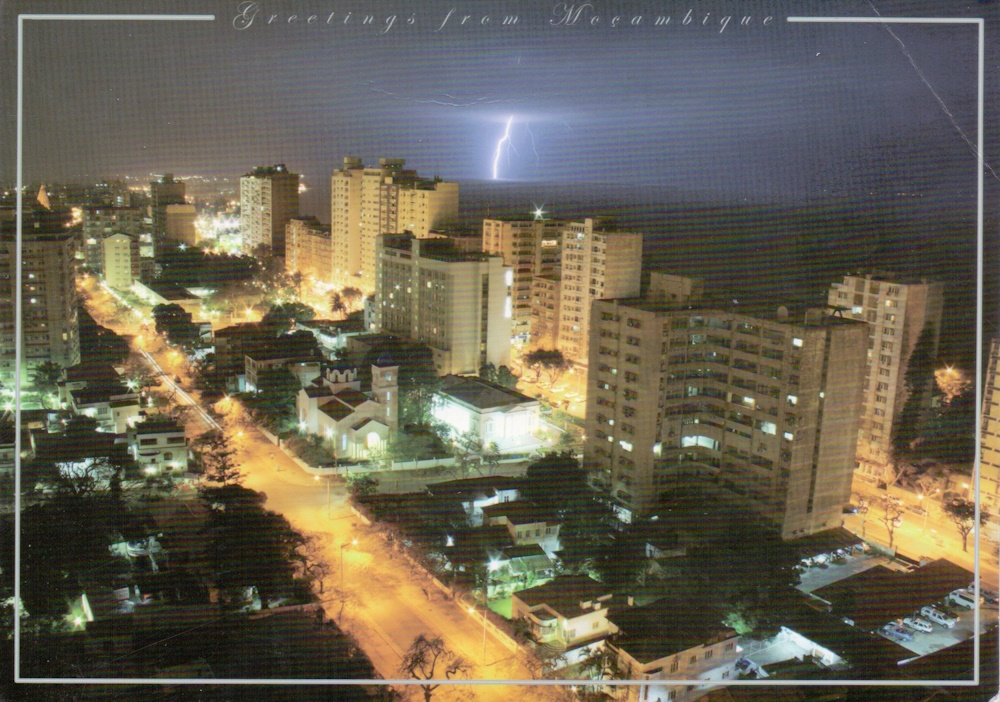
Mozambique is a country located in southeast Africa right across the Mozambique Channel to the east from Madagascar. The country was named by the Portuguese, who ruled the country for four centuries, after the Island of Mozambique, derived from Mussa Bin Bique, an Arab trader who first visited the island and later lived there. The capital and largest city is Maputo, part of which is shown on this postcard. Although Portuguese is the official language, only two-fifths of the country’s inhabitants speak it, and they are strongly concentrated in the capital of Maputo.

Mozambique postcard

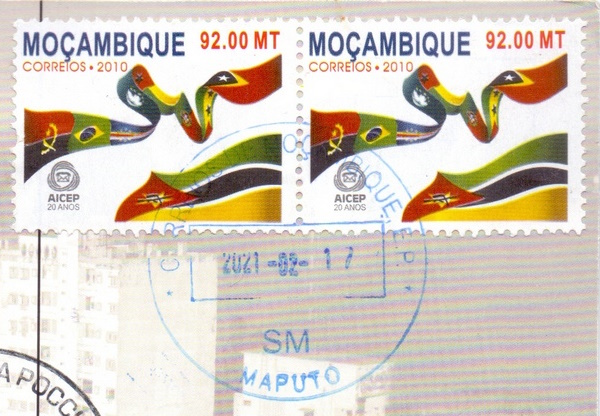
Mozambique stamp and postmark

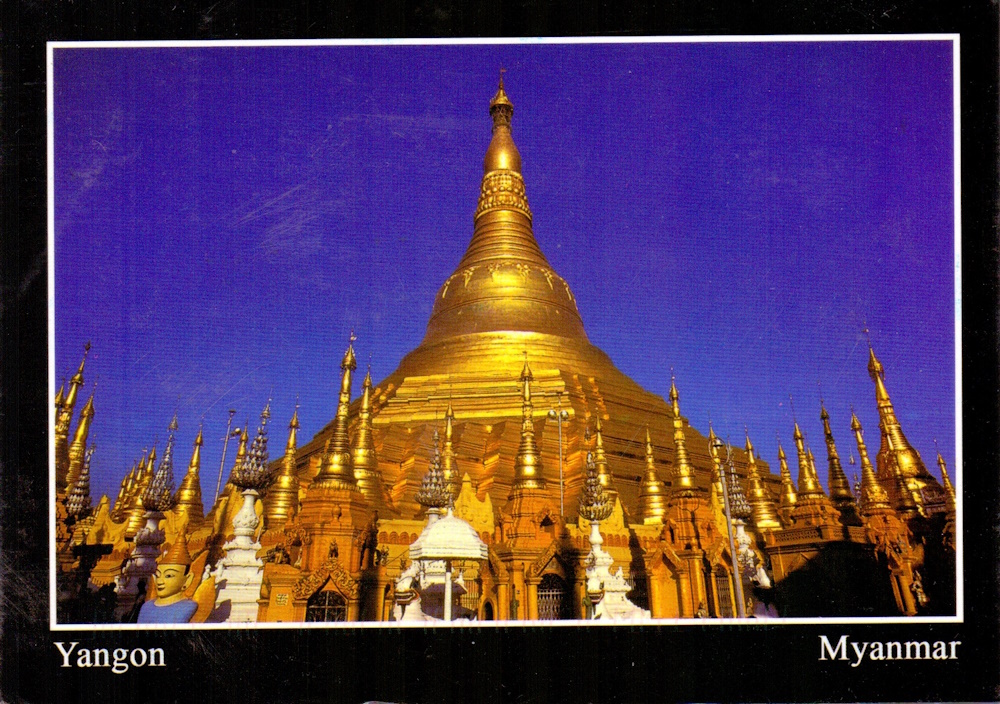
Yangon, Myanmar

Myanmar (also known as Burma, it’s previous official name), is a country located in Southeast Asia. Yangon, pictured on this postcard, is a former capital, and the largest city in Myanmar. Yangon has the largest number of colonial-era buildings in Southeast Asia. It’s unique colonial-era urban core, that is still intact, is is centered around the 2,000 years old Sule Pagoda — a Burmese Buddhist stupa, which is also pictured on this card.

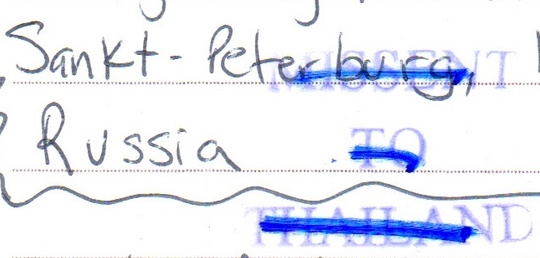
Looks like this card was missent Thailand, but eventually made it to Russia.

Myanmar Burma postcard

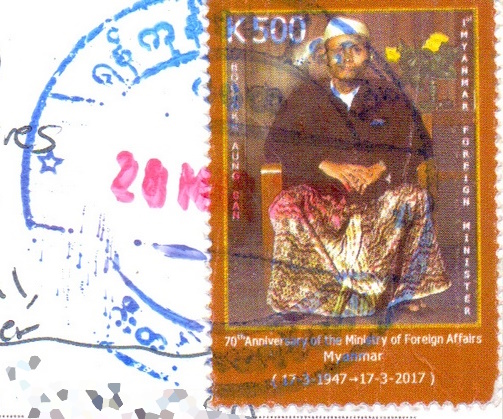
Myanmar Burma stamp postmark

Myanmar postal mark

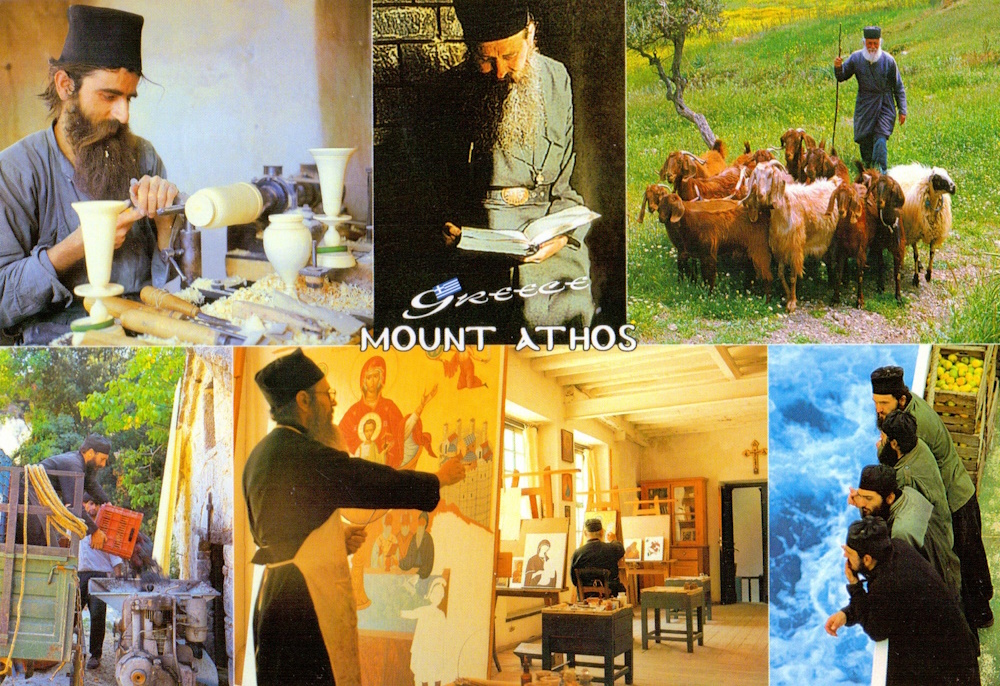
The Holy Mount Athos, Greece

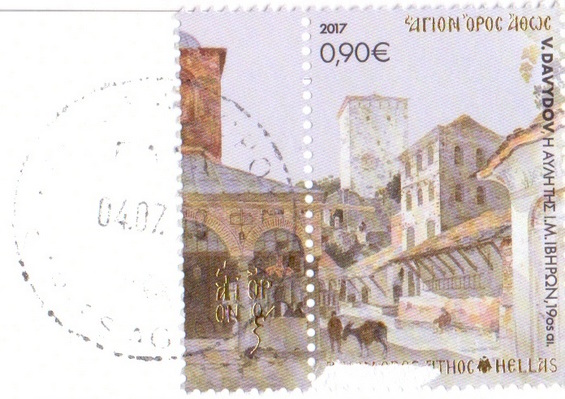
The Holy Mount Athos is an autonomous and self-governed territory of Greece, it has this status since Byzantine times. It occupies the whole of the third peninsula of Chalkidiki in northern Greece. In the center of the peninsula rise a long range of hills and mountains, culminating in Mount Athos itself, 2,033m high. It is a unique male monastic society, an Orthodox spiritual center since the 10th century — accessed only from the sea and allowed to men only.

Mount Athos postcard

Morocco

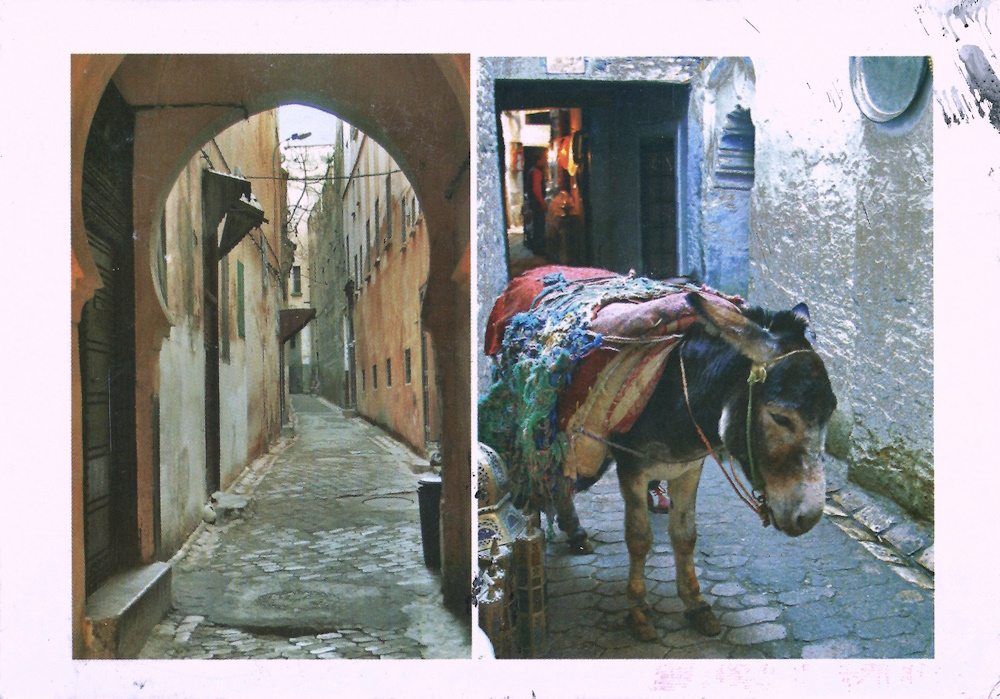
Morocco is located in the northwest corner of Africa on the coasts of the Atlantic Ocean and the Mediterranean Sea. It is just across the Strait of Gibraltar from Spain, and two small Spanish-controlled areas, Ceuta and Melilla still remain today on it’s territory. Morocco’s four historical capital cities of Morocco — Fez, Marrakesh, Meknes and the current capital Rabat — are called The Imperial Cities. Their maze-like medinas (old centers) are UNESCO WHS. Morocco is the most visited country in Africa.

Morocco postcard

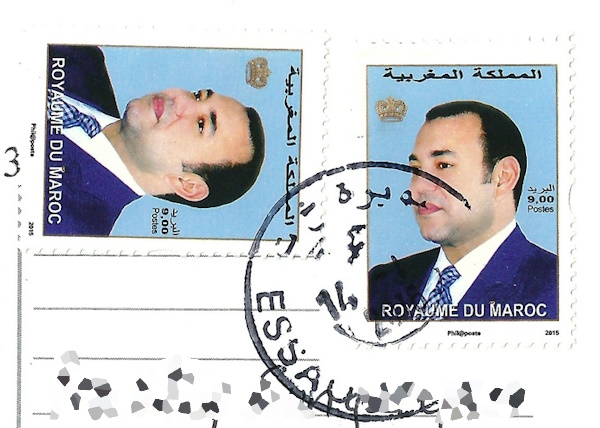
Morocco stamp postmark